Jessica Harper Uncanceled

A conservative take on news, culture and life. 1984 was a warning, not a playbook.

The F-word (not that one) and why I hate it in entertainment

Yes, dear reader, I am talking about the flashback, a device that is used oh-so-frequently in novels, films and TV these days. Much more frequently, in fact, than it ever was in the past.

And what is wrong with the flashback, Jess, you ask, as you sip 2013 Dom Pérignon in your fabulous duplex (this is how I picture my readers).

Let me give you an example. I will use a, er, flashback.

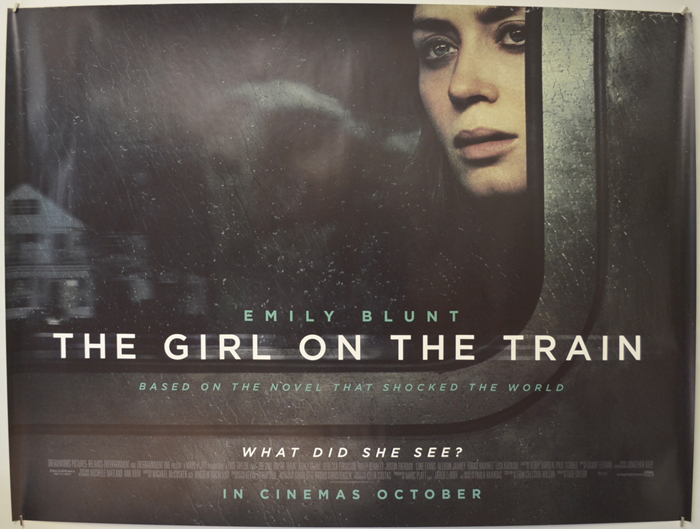
Monday. I bought one of those “girls on the” books (not The Girl On The Train, which I liked, although thinking about it, that had a lot of flashbacks. Anyway, why are all those books called “the girl” like the protagonist is seven years old? If she’s a girl she wouldn’t have been travelling unaccompanied and the book would have been called The Girl Travelling With A Parent or Nominated Guardian).

I digress.

As soon as I got home and opened the book I realised the whole thing was told in alternating “Now” and “Then” chapters. My heart sank, and not because I’d just splashed out a dollar on the book.

My heart sank because I knew I wasn’t going to like it.

I gave it my customary minimum 100 pages and indeed gave up. It just felt like two steps forward, one step back all the time. A book is meant to have you getting excited in some way the nearer you get to the end, and this doesn’t work for me if the writer is metaphorically tugging you back by the shirt all the time.

It’s like they’re saying: “Not so fast, I know something you don’t.” Which of course they always do, being the writer, but the excessive use of flashbacks just kills the momentum for me. It sort of damages the trust I have in the writer, that sense that they are leading me through this, that we’re doing it together.

It’s like if the projectionist (okay they probably don’t have projectionists in the cinema these days but humour me) kept stopping the movie, just because he can (or because he’s an alcoholic and can’t work the equipment).

Or it’s like one of those parties where you’re a bit merry (five glasses of wine merry, you’ve been there) and the host insists on everyone playing some complicated game when you just want to dance, drink and talk nonsense.

Hmm, this might just be the analogy I’m grasping for: are flashbacks party killers?

The reason for their growth, I believe, is what I call Complication Culture, that attitude within entertainment whereby everyone has to make their plots hard to follow.

Complication Culture emerged in the mid-noughties with the rise of “smart TV”.

TV used to be cinema’s dumb cousin, didn’t it? It was cheaper, crasser, peopled with actors who weren’t good enough to be in the movies. Well, not any more, mister! Welcome to the era of smart TV. Mad Men, Breaking Bad, Lost, Stranger Things. All shows I loved, by the way. But they were much more complicated than they used to be. And if you can’t keep up, well, maybe you should keep quiet about it as you don’t want people thinking you’re stupid, hmm?

And flashbacks have been a key tool in the Complicated Culture practitioner’s toolkit.

Thoughts?

J x

11 responses to “The F-word (not that one) and why I hate it in entertainment”

  1. I hear you. Too many flashback sections can ruin the flow of a good story. I feel the same way about narrative from 4 different characters that switch every chapter. It’s jarring..

    Liked by 1 person

  2. I think I don’t mind flashbacks as much as alternating voices which can be very confusing if not well done — especially if there are more than 2 voices — 2 pages into the next chapter and you’re still not sure who’s talking this time or you have to be told explicitly in the chapter title whose voice it is. It can be beautifully done or really, really poorly done. I suppose some authors’ flashbacks are the same but maybe not as often so terribly bad.

    Like

    1. Yes, it can be good. My brain is just getting frazzled reading too many modern thrillers where they use it. Back to Jane Austen for a while…

      Like

  3. I listen to most books. I enjoy audio because I am in my car a lot and it makes the time go by faster. If the narrator does not tell you it is a flashback and just starts reading the next chapter, it is very annoying. I will usually give up and return the book.
    There are a couple of authors, however, who do this very well and if it is historical fiction (and written well) I will usually be ok with flashbacks if it is a complete story of it’s own. For example, one author I read/listened to has a series and each story was two fold. There was the current time story and then the ancestry story from a great grandmother. This was to tell the current protagonist where they came from and the roots of their family. I loved it. But this was a unique situation where I got sucked into the entire series and had to see how it ended. However, like you, I do not usually like “flashbacks” from the protagonist point of view. This is truly annoying in some cases. If it is something we need to know, then write the book from the beginning of the story and leave the flashbacks out!

    Like

    1. Oh yes, can’t imagine what a flashback-heavy story is like on audiobook. I’m a visual person so I need to see it on the page. My mind wanders otherwise…

      Liked by 1 person

  4. Interesting. Another blogger’s post touched on the same subject. With the same disdain. I defended the flashback concept. My primary defense was that if the reader cannot easily follow, I’ve not done my job as a writer. Underlying that argument is that I [said this many times before] believe today’s reading audience generally lazy, ignorant, and interested in questionable literature. I’ll grant you flashbacks can be overdone and I admit television mysteries loaded with flashback can be confusing, distracting and aggravating. But then, as a television viewer I am generally lazy, ignorant, and interested in questionable literature. I don’t mind spoon feeding my reader when what I’m suggesting could be difficult. That’s rare. I want my reader to be involved, think, and try to outsmart me or at least guess at underlying meanings I might have tucked away. Flashback, which detractors say ruin a story’s flow, is an effective tool judiciously employed, controls delivery of motive and revelation. Keyword, I guess, judiciously.

    Like

    1. Very interesting points, thanks. I agree re “judiciously”. Modern writers and TV producers seem loath to leave things alone, they think they need to overegg the pudding. I say simplicity is fine! You don’t have to play mind games with me every time I watch a film or read a book.

      Liked by 1 person

      1. We agree, I reckon. Nonetheless, two “complainers” in the space of a day should suggest the practice irks many folk. Then, when have I ever paid attention to sage advice, eh?

        Like

  5. I’ve read some novels that do the time skip style chapters well…the settings and action are different enough that it’s easy to tell if you are ‘then’ or ‘now’. But as a rule, I’m not a big fan of multiple timelines being told at the same time. Jump back, tell the story, then continue the now story. Stop skipping around like a squirrel.

    Like

    1. Ha yes, and it seems to have grown in popularity in recent times. It’s like they have to add something else to be thought clever.

      Liked by 1 person

  6. […] my favourite writers but this was just too dull. I gave it 200 pages, which I think is fair enough. The cursed flashbacks strike again! I wish he’d return to plots with some tension (Enduring Love, Atonement, On Chesil Beach); […]

    Like

Leave a comment